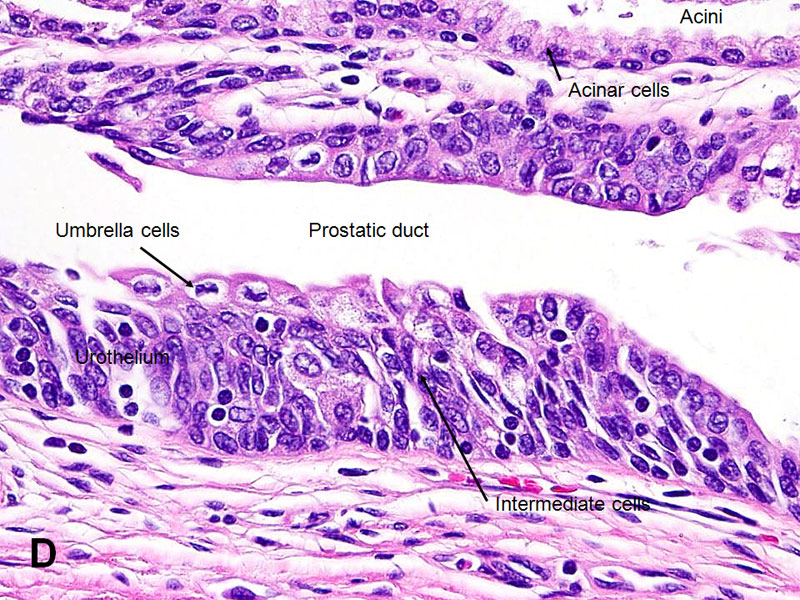
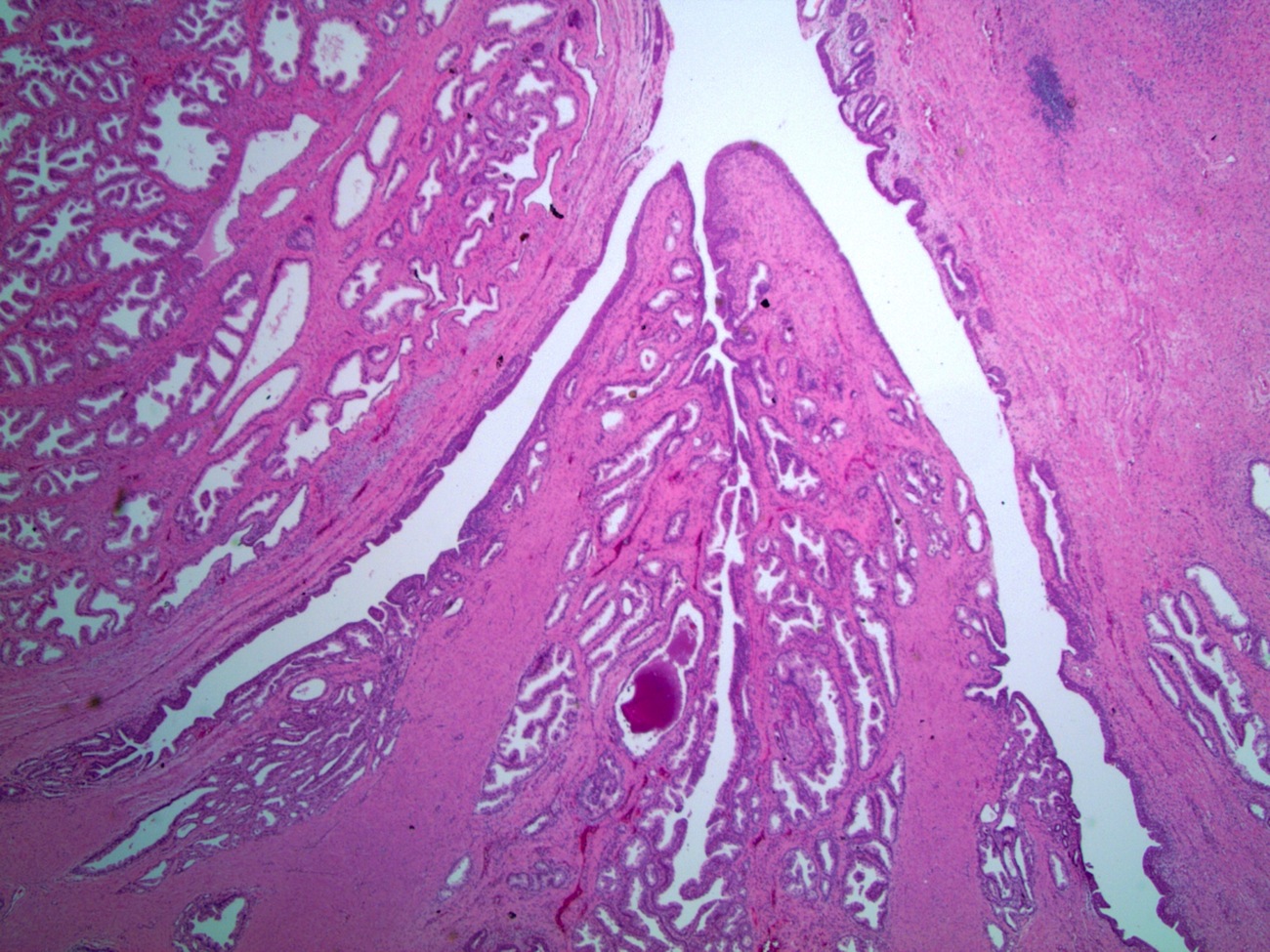
The prostatic urethra, the widest and most dilatable part of the urethra canal, is about 3 cm long.
It runs almost vertically through the prostate from its base to its apex, lying nearer its anterior than its posterior surface; the form of the canal is spindle-shaped, being wider in the middle than at either extremity, and narrowest below, where it joins the membranous portion.
A transverse section of the canal as it lies in the prostate is horse-shoe-shaped, with the convexity directed forward.
The keyhole sign, in ultrasound, is associated with a dilated bladder and prostatic urethra.
Additional images
References
This article incorporates text in the public domain from page 1234 of the 20th edition of Gray's Anatomy (1918)
External links
- Anatomy image: malepel2-4 at the College of Medicine at SUNY Upstate Medical University
- Cross section image: pelvis/pelvis-e12-15—Plastination Laboratory at the Medical University of Vienna
- Anatomy photo:44:05-0201 at the SUNY Downstate Medical Center - "The Male Pelvis: The Prostate Gland"
- Chronic Prostatitis - Four Major Symptoms and Three Lifestyle To Follow